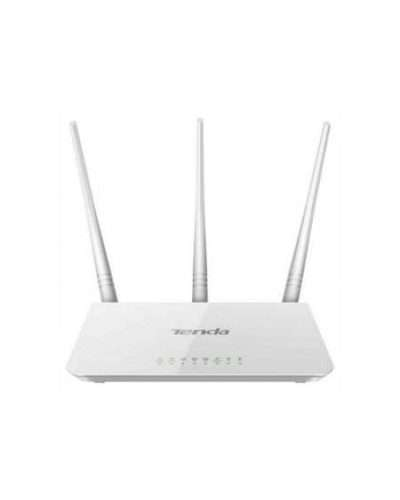
A router bought for a two-bedroom flat rarely copes when the same household adds a smart television, two laptops and five phones into the equation. The signal drops in the back room and video calls freeze at the worst moment. The Tenda router price in Kenya covers a wide range of models, and the cheapest one is not always the wrong one to buy.
Choosing well starts with matching features to how the space is actually used. Comparing the Tenda router price in Kenya against antenna count, wireless speed, port type and device capacity gives you a straight answer on which model fits. The listings here show those specifications side by side, so the right unit is easy to identify before checkout.
Why a Router That Worked Last Year Struggles Today
Device Load Grows Faster than Most Households Expect: A router rated for a handful of connections slows down as phones, tablets, security cameras and streaming boxes join the same network. Each device holds a share of the available airtime even when nobody is using it. The hardware has not failed. It is being asked to manage traffic it was never specified for.
Weak Coverage Costs More than It First Appears: Network technicians in Nairobi regularly attend call-outs where the reported fault is an internet problem and the actual cause is a router placed behind a wall with a single antenna. Households pay for a bandwidth package they never fully receive. Businesses lose staff hours to reconnections that a better matched unit would prevent.
Features That Decide How a Router Performs in Daily Use
Antenna Count Shapes Where the Signal Reaches: More external antennas spread the wireless signal across a wider area and hold it steadier at the edges of a building. Routers that apply beamforming technology direct that signal towards connected devices rather than scattering it evenly, which lifts performance in a back bedroom or a rear office without any change to the internet package.
Wireless Speed and Frequency Set the Ceiling: A 300Mbps wireless rating describes the maximum shared across the network, not the speed each device receives. The 2.4GHz band travels further and passes through walls more easily, and the 5GHz band carries more data over shorter distances. Homes with thick walls often gain more from reach than from raw speed.
Ethernet Ports and Setup Time Matter More than Buyers Assume: Wired ports still carry the steadiest connection for a desktop, a printer or a decoder that stutters over wireless. Fast Ethernet ports cap at 100Mbps, while Gigabit ports handle faster packages without a bottleneck. Setup through a mobile browser takes minutes on most models, which keeps installation costs off the bill entirely.
F3 Compared with F6 across the Same Network Conditions
Three Antennas Suit Compact Spaces: The F3 carries three external 5dBi antennas and a 300Mbps wireless rating, which covers a one or two bedroom flat, a small shop or a single office room. It handles browsing, streaming and video calls for a moderate number of devices. The trade-off appears in larger buildings where the signal thins out past one wall.
Four Antennas Hold Coverage across Wider Layouts: The F6 adds a fourth antenna to the same 300Mbps platform, which spreads coverage further through a maisonette, a larger office or a household running several connected devices at once. The Tenda router price in Kenya rises only modestly between the two, though for a compact space with four devices that extra reach delivers little practical gain.
Long Term Value Comes from Matching Features to Actual Need
Traffic Control Keeps a Network Usable as It Fills: Routers that support quality of service rules let you prioritise a work call or a payment terminal over a background download, which keeps critical tasks steady during busy hours. That control matters far more than a headline speed figure once a household or office pushes past a handful of active connections.
Postponed Replacement Quietly Drains Time and Money: Holding on to an underpowered router pushes the cost sideways rather than removing it. Households buy signal extenders that create a second weak network, and offices pay for higher internet packages the hardware cannot deliver. Specific models also sell out, so the unit compared last month may return only at a higher figure.
See also: The Evolution of Mobile Technology
Checks Worth Making before Any Router Purchase
A short list of checks turns the Tenda router price in Kenya into a clear comparison rather than a guess. Each point below reflects how the hardware behaves once it is installed and loaded with real traffic, which is where most disappointment starts for buyers who judged a model by its speed rating alone.
- Count the devices that connect at the same time, including cameras and smart televisions.
- Measure the distance between the router position and the furthest room in daily use.
- Check the antenna count, since reach depends on it more than on the speed rating.
- Confirm the Ethernet port speed if a desktop or decoder will run on a cable.
- Note whether the walls are concrete or partition board, as this changes signal reach.
- Look at the setup method, because a browser based process avoids a technician fee.
Buying the Router That Fits the Space You Have
A router chosen against real coverage needs and real device numbers removes the daily frustration that no internet package can fix. Every month spent working around a weak signal costs time that never comes back. Weigh the Tenda router price in Kenya against the features your space actually demands, then get in touch for help picking the right model.